
Bibimbap (Korean Mixed Rice Bowl)
Description
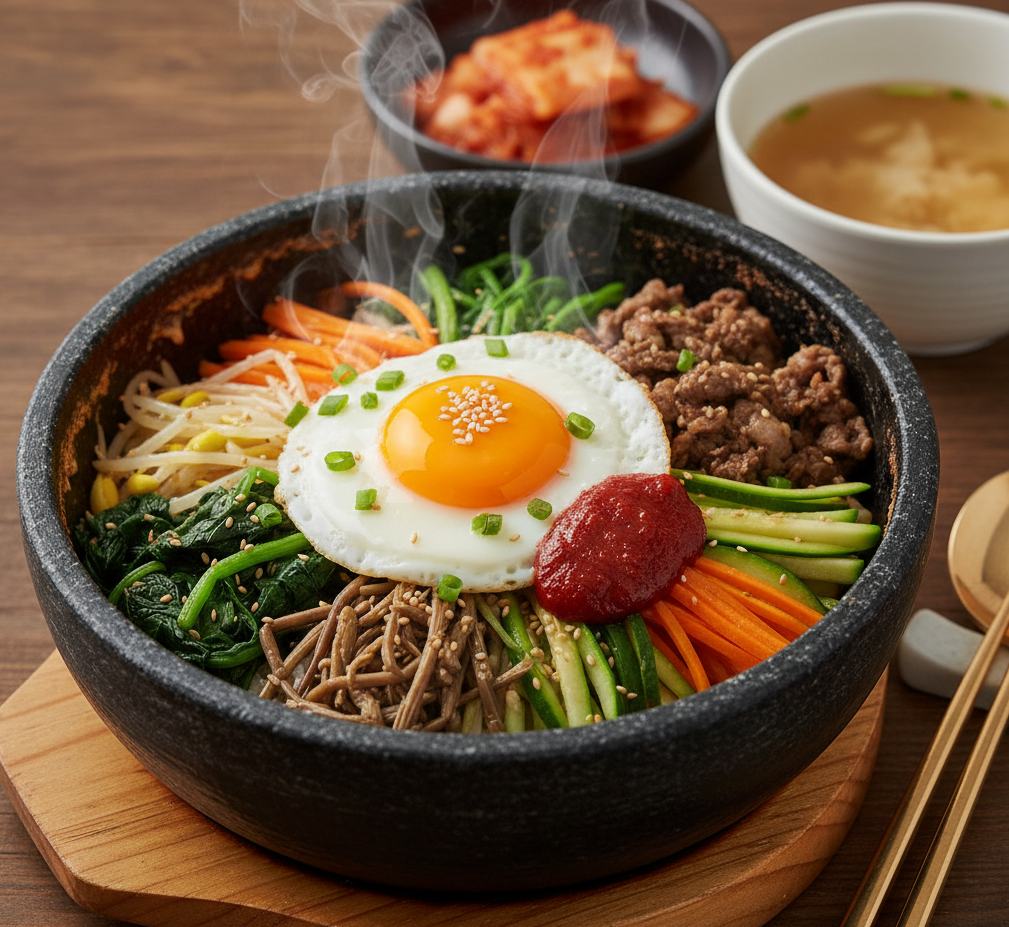
Bibimbap is a beloved Korean dish known for its balance of flavors, colors, and textures. It features a base of warm steamed rice topped with sautéed vegetables, marinated beef, a fried egg, and gochujang (Korean chili paste). Each bite combines savory, spicy, and umami notes, making it both healthy and satisfying. Perfect for lunch or dinner any time of the year!
Ingredients
Instructions
-
-
-
Prepare the rice:
Cook the rice according to package instructions. Keep warm. -
Prepare the vegetables:
-
Spinach: Blanch in boiling water for 1 minute, drain, and season with sesame oil and salt.
-
Carrots & Zucchini: Sauté separately in a little oil over medium heat for 2–3 minutes each until slightly tender.
-
Bean Sprouts: Blanch for 2 minutes, drain, and lightly salt.
-
Mushrooms: Sauté in a bit of oil with minced garlic and soy sauce until tender.
-
-
Cook the beef (optional):
In a small bowl, mix beef slices with soy sauce, sesame oil, sugar, and garlic. Sauté in a pan over medium-high heat until browned and cooked through. -
Fry the eggs:
Fry eggs sunny-side-up until the whites are set but yolks remain runny. -
Assemble the bowl:
Place warm rice at the bottom of each bowl. Arrange vegetables and beef neatly on top in sections. Place the fried egg at the center. -
Add sauce and garnish:
Add a spoonful of gochujang on top. Sprinkle sesame seeds for garnish. -
To eat:
Mix everything together thoroughly before eating for the full Bibimbap experience!
-

-
Nutrition Facts
Servings 2
- Amount Per Serving
- Calories 520kcal
- % Daily Value *
- Total Fat 17g27%
- Saturated Fat 4g20%
- Total Carbohydrate 65g22%
- Sugars 5g
- Protein 22g44%
- Vitamin A 2500 IU
- Vitamin C 20 mg
- Calcium 120 mg
- Iron 4.5 mg
* Percent Daily Values are based on a 2,000 calorie diet. Your daily value may be higher or lower depending on your calorie needs.
Note
You can easily make vegetarian Bibimbap by omitting beef and adding tofu or more mushrooms. For a gluten-free version, use gluten-free soy sauce or tamari. Adjust the level of gochujang to your spice preference.